
Providing job seekers with the ability to search, explore, and discover suitable job postings based on their individual preferences and criteria, the job portal app enables job seekers to take a more proactive and informed approach to their job search process.
Client:
Hiring Agency
My Role:
Lead Designer
Year:
2022
Tools:
UX/UI Design, Mobile Design
After eight months of design and development work, the app was launched, and the results have been impressive. User engagement has increased by 30%, with an average of 15% more time spent on the app by users. Additionally, the team has reported a 20% increase in app downloads and a 25% increase in in-app purchases.

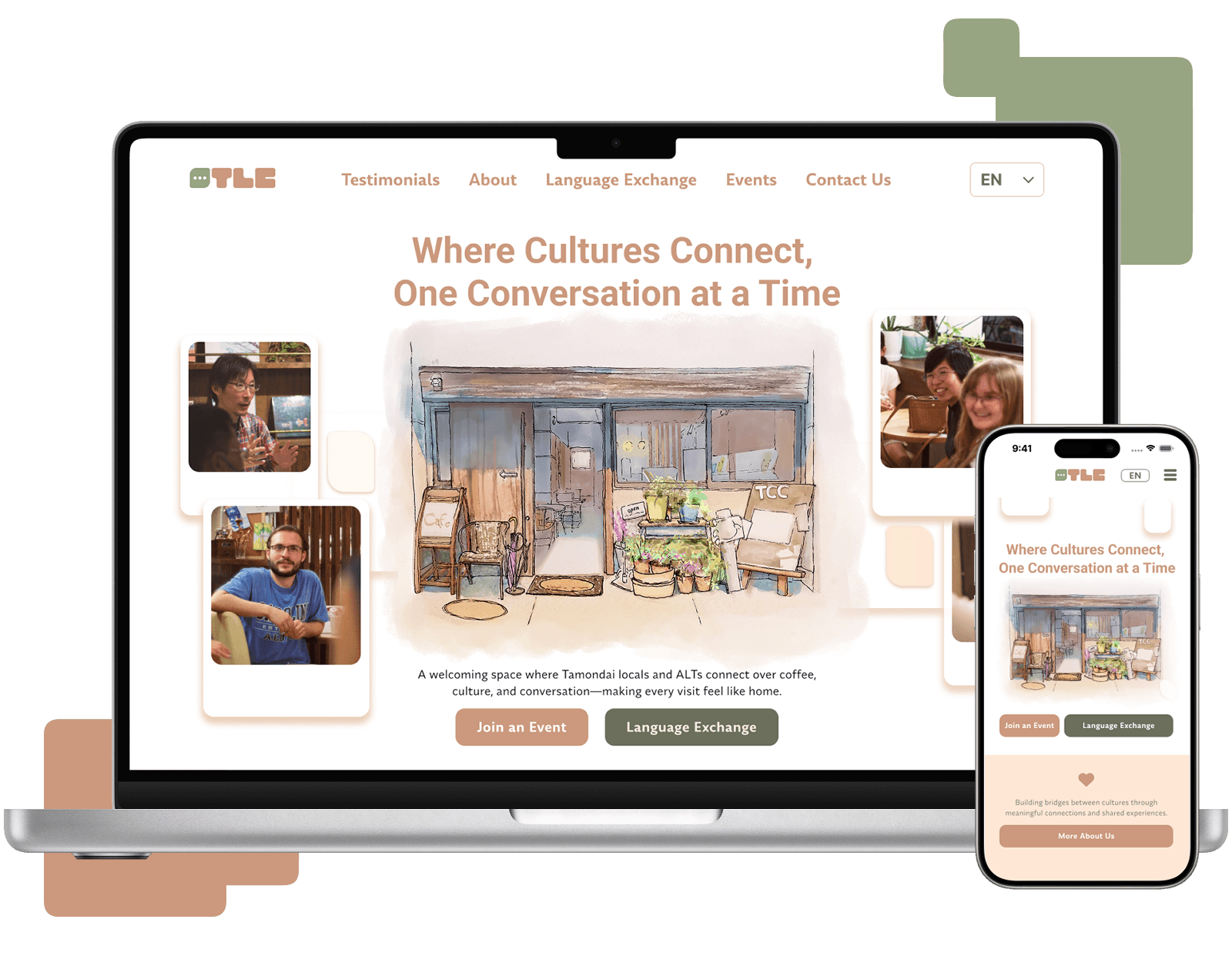
Creating a centralized digital space where language, culture, and community could connect naturally — minimizing confusion, reducing organizer burden, and making it effortless for newcomers to understand, join, and participate. By turning scattered information into a cohesive experience, TLC could grow without losing its heart.
Joining TLC becomes effortless — clear navigation and a welcoming first impression help newcomers get oriented quickly.

The design highlights diverse member stories and cultural experiences, putting meaningful exchange at the center.
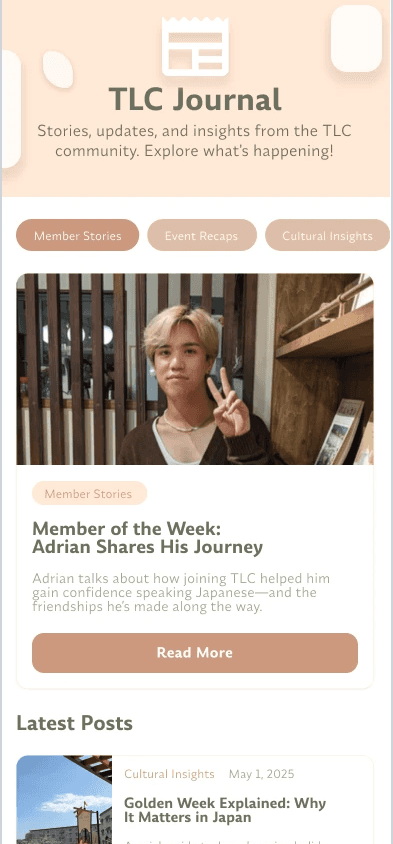
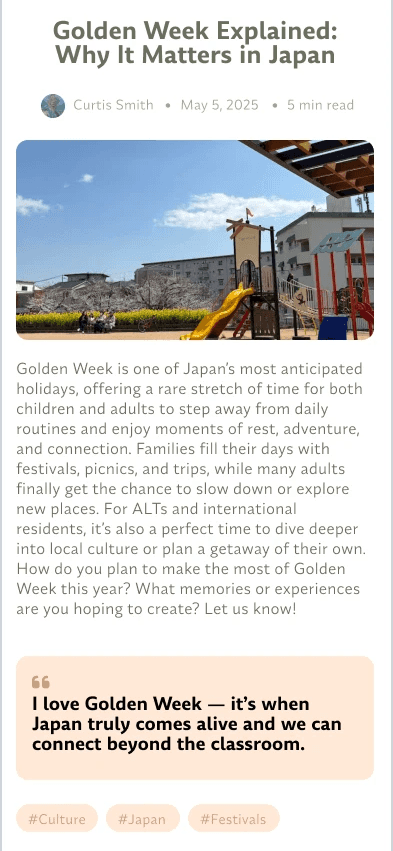
Dedicated spaces invite members to share, reflect, and stay connected, nurturing an active and supportive community.
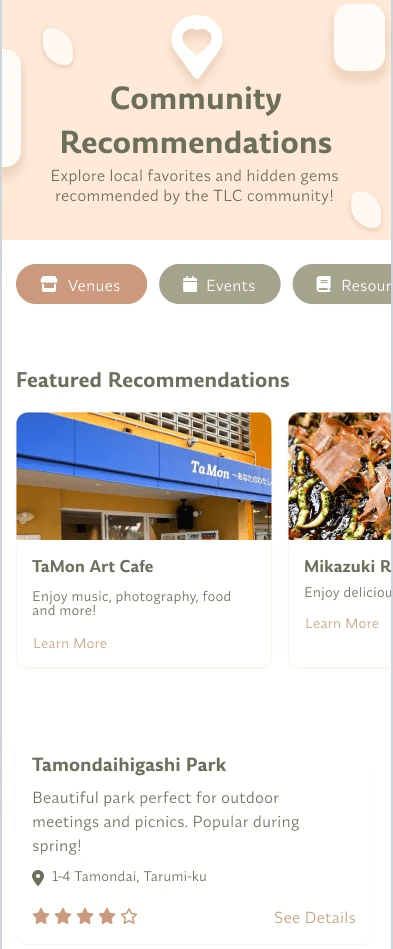
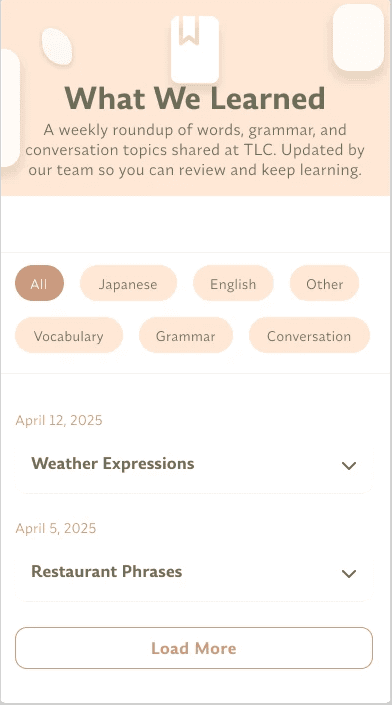
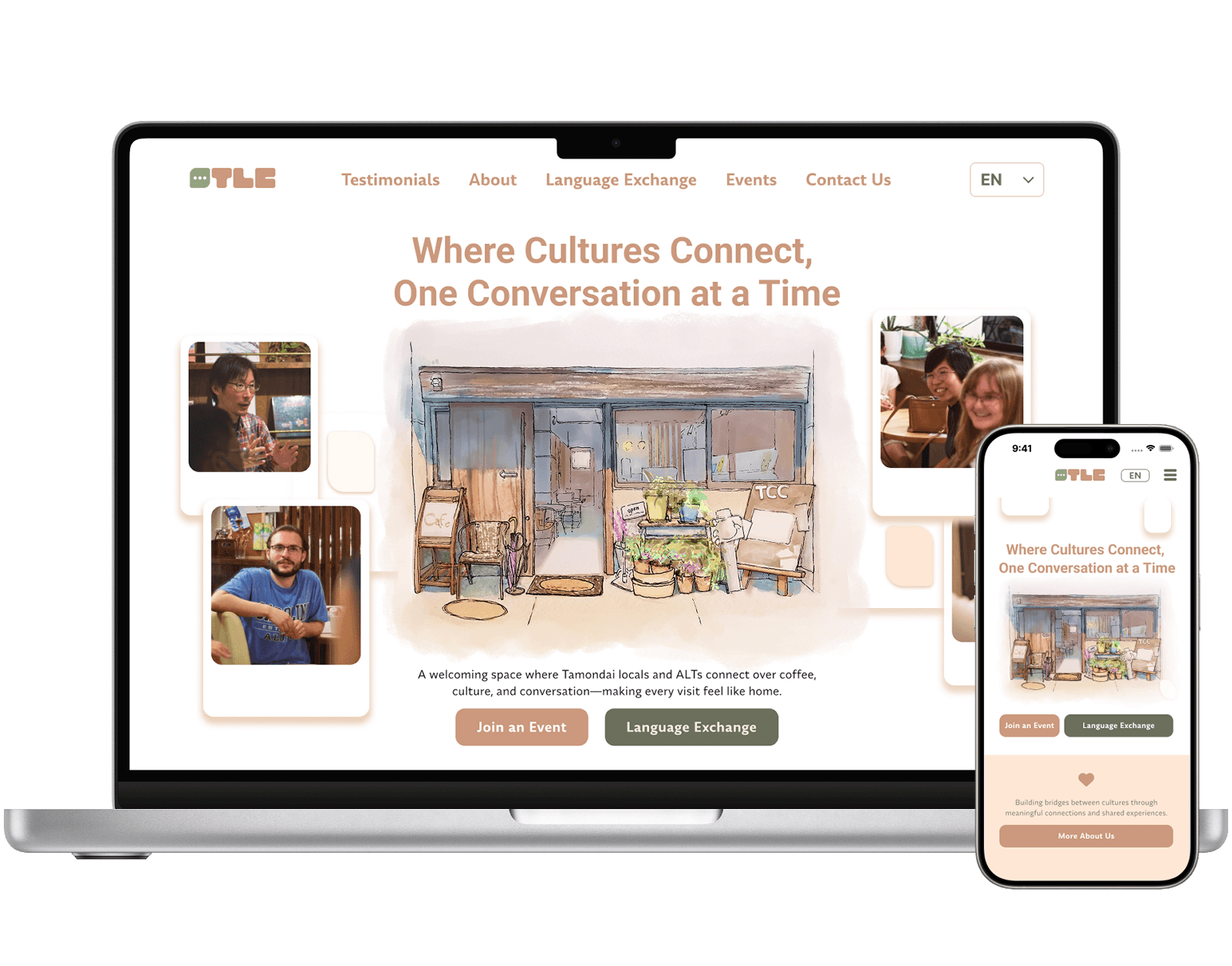
After uncovering the main barriers to joining or navigating TLC events — from unclear messaging to scattered updates — I designed a mobile-first interface that brings clarity, ease, and confidence to new attendees.
The UI emphasizes simplicity, low-pressure engagement, and accessibility for both ALTs and local Japanese users.
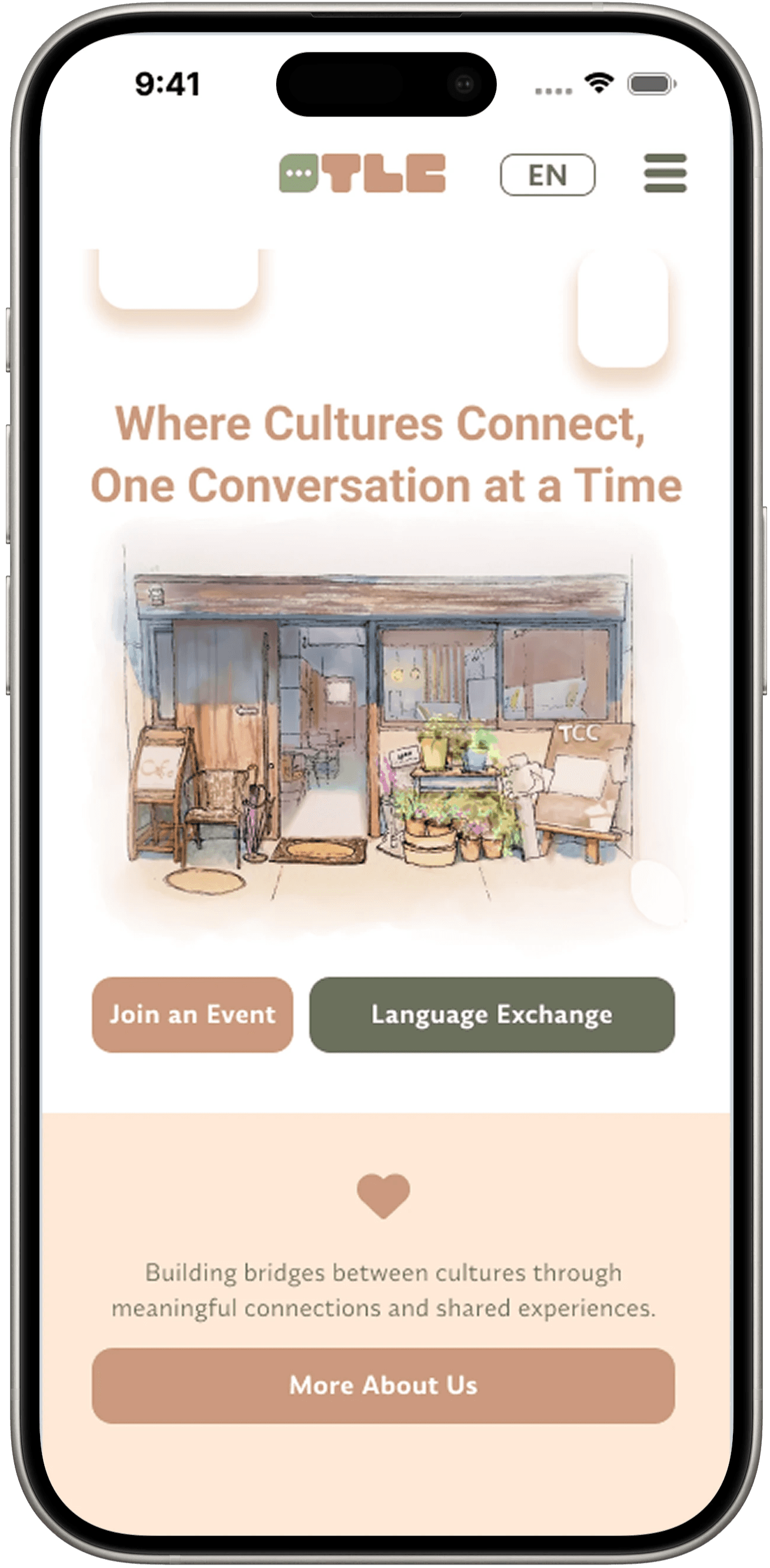
First-time visitors see what TLC is at a glance, with a clean headline and subtle visual cues for language options. It builds trust and lets people know this is a casual, safe place to join.
RSVP was simplified to reduce friction for first-time visitors. Users can express interest without needing to register or log in.
The flow includes friendly confirmations and clear language to ease hesitation and increase follow-through.
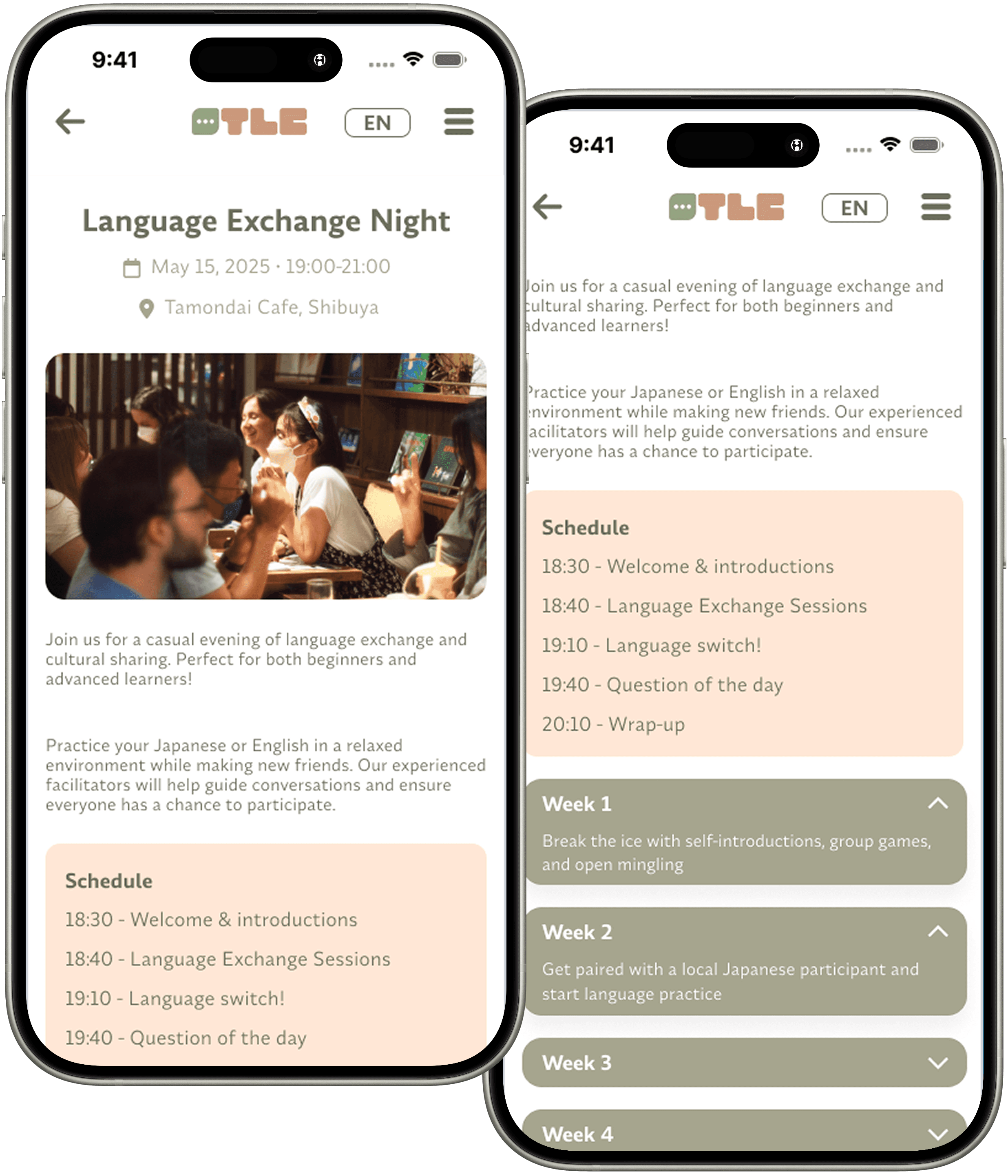
This screen consolidates the most commonly asked information: time, location, language level, vibe, and what to expect.
The layout prioritizes scannability and reduces cognitive load by grouping details logically.
A central space for sharing stories, recaps, and tips from both locals and ALTs. This section encourages connection through reflection, with a clean card layout and tag filters that make it easy to explore by topic or language — reinforcing TLC’s culture of shared growth.
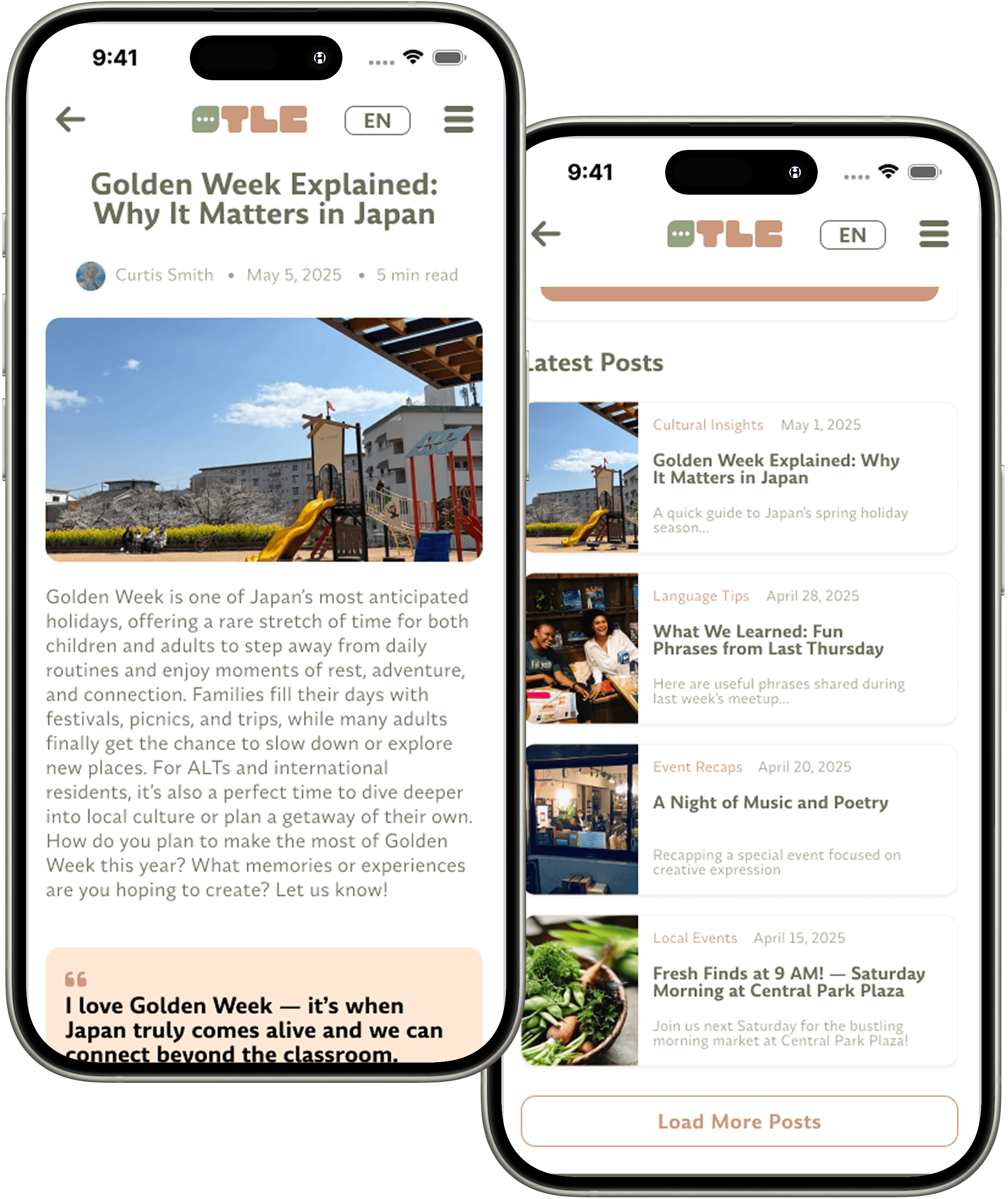
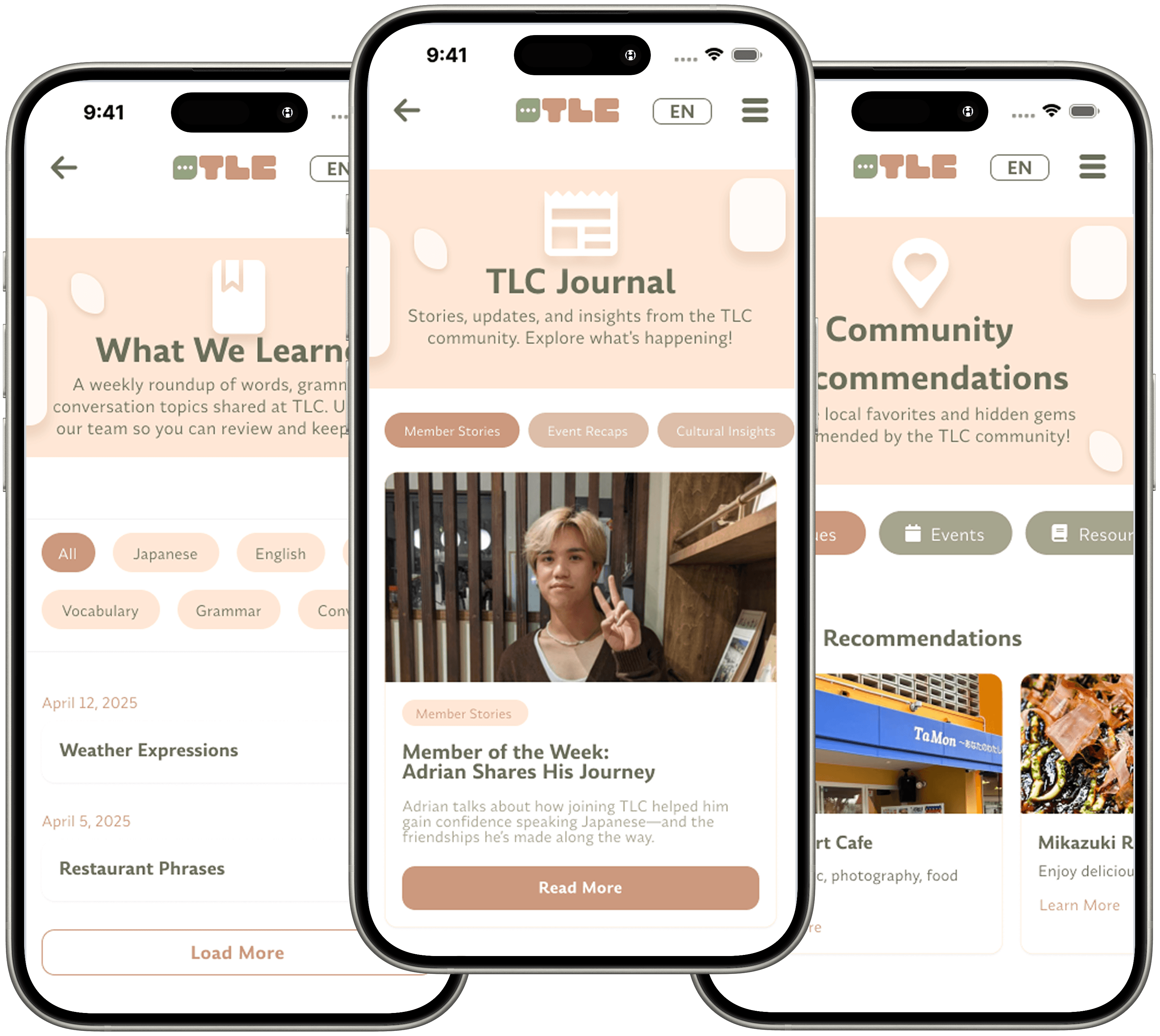
A shared tagging system connects all content areas — blog posts, learning recaps, and attendee suggestions. Users can filter by language, topic, or audience to quickly find relevant insights. It also allows TLC to surface community-sourced recommendations in a lightweight, moderated way.
Pain Points
1
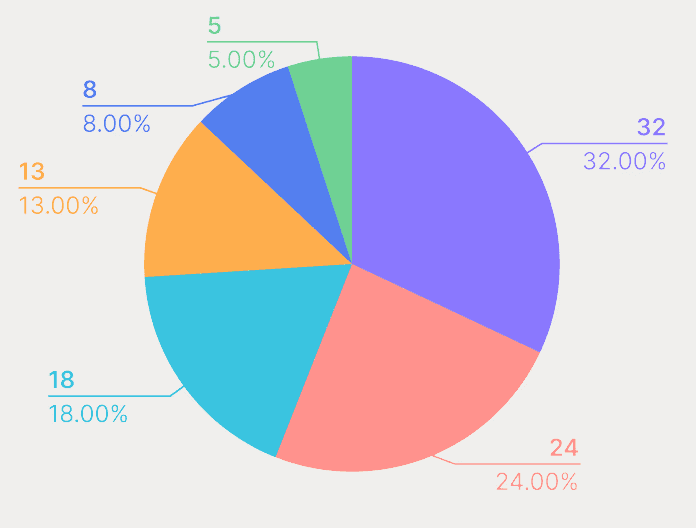
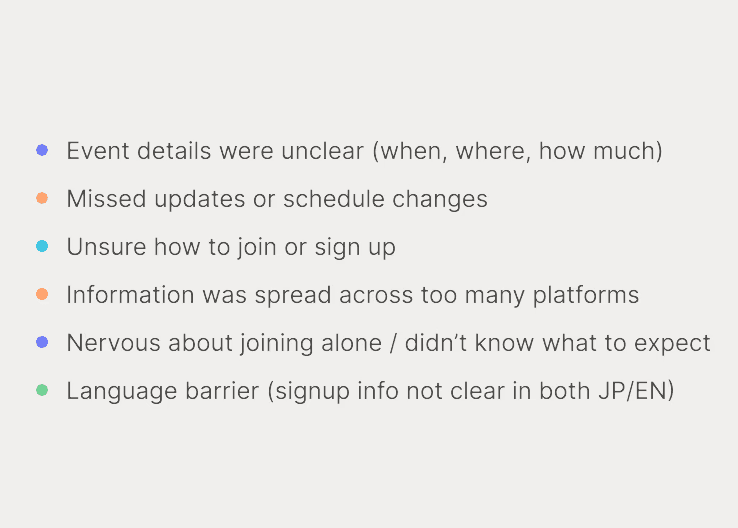
Most TLC participants relied on LINE or word-of-mouth to get updates, which made it easy to miss important details.
2
Organizers were repeating the same info frequently due to lack of a centralized, easy-to-access place for newcomers.
3
New members often felt unsure how to join or what to expect, especially when bilingual support wasn’t immediately visible.
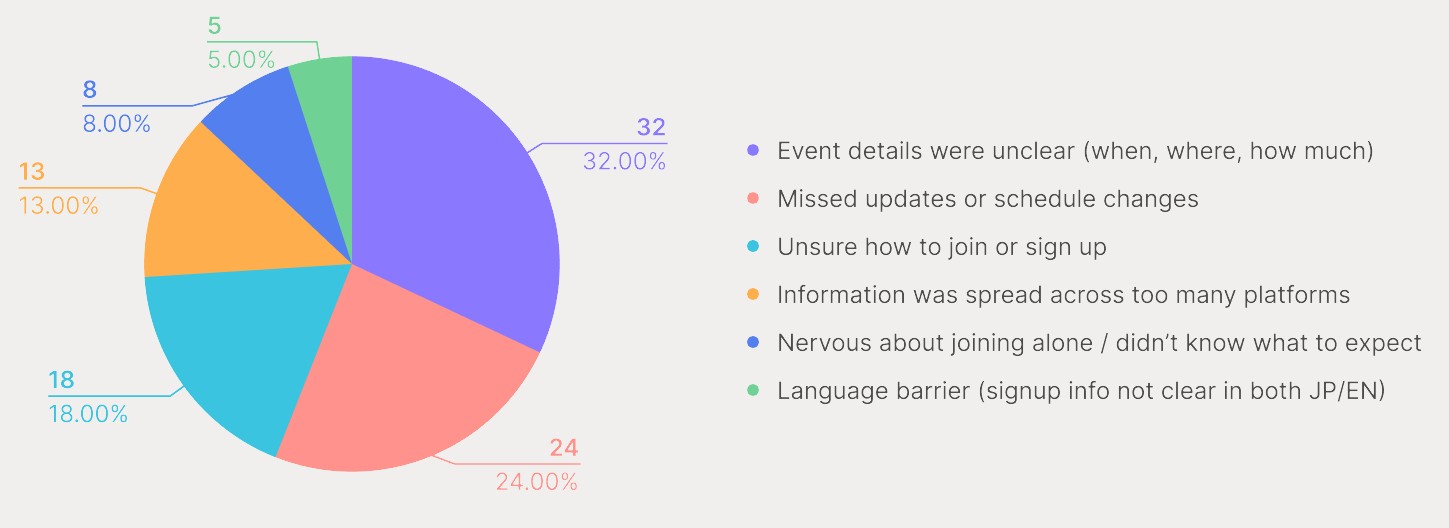
Where Users Spent the Most Time Navigating TLC
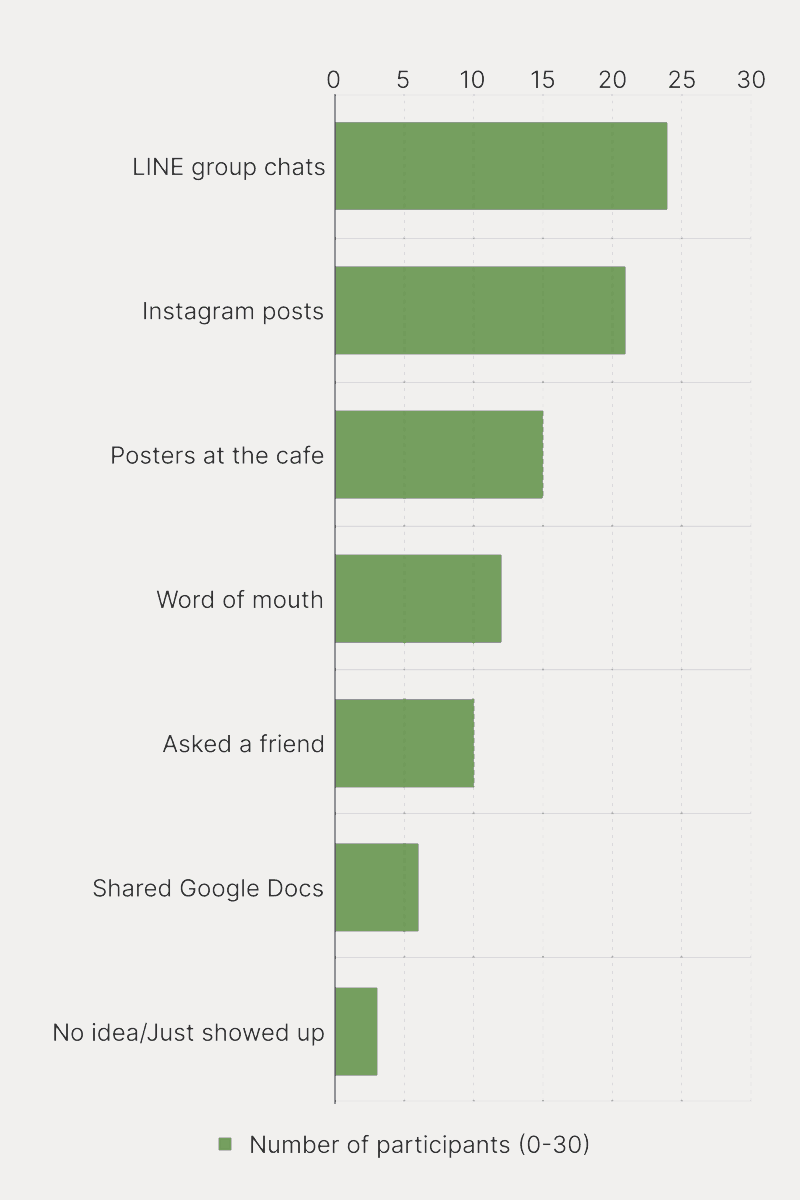
Most people rely on LINE and Instagram, but overlap between sources creates confusion. Even with posters and personal invites, a few still showed up unsure about what TLC even was — reinforcing the need for a centralized, bilingual digital home.
"
We usually just post in the LINE group, but people still ask the same questions every week.
— TLC Organizer
"
If someone new asks how to join, I just send them whatever link I can find at the time.
— ALT Participant
What Participants Wish They Knew Before Coming
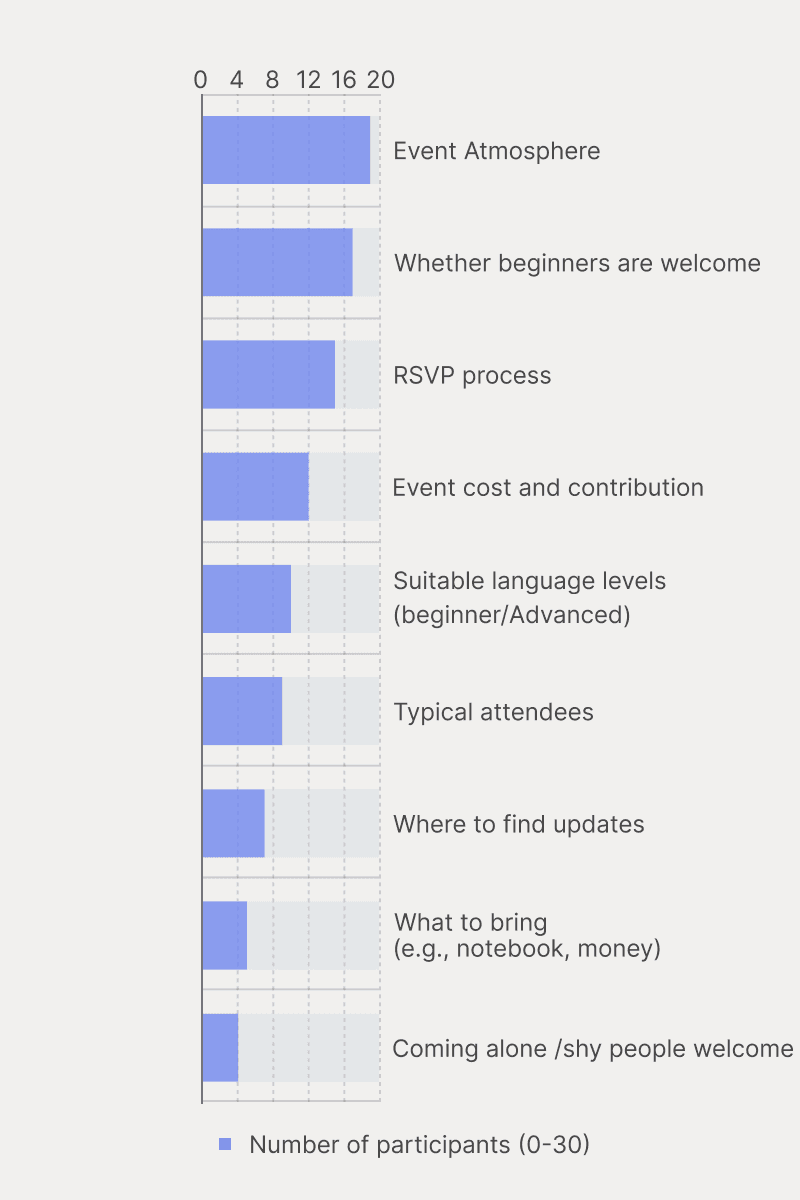
The less participants knew about the event beforehand, the more hesitation and confusion they reported. For many, it wasn’t the content or language level that held them back — it was simply not knowing what to expect.
1
Uncertainty around the vibe, language level, and RSVP flow led to second-guessing participation.
2
Newcomers wanted reassurance that the space was beginner-friendly and casual — not a formal or advanced-level class.
"
I didn’t know if I had to sign up or if beginners like me were even welcome.
— New ALT attendee
"
Since I’m not confident in English, I wasn’t sure if the atmosphere would be casual or not, so it took a bit of courage to join.
— First-time Japanese participant
Every visual choice was made to ensure clarity, comfort, and inclusivity — especially for bilingual users encountering TLC for the first time.
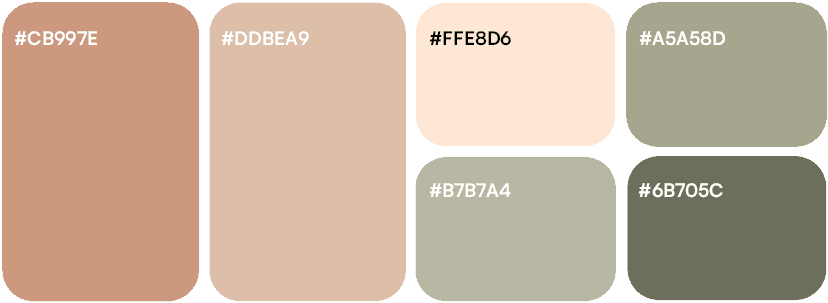
A soft but high-contrast palette of warm browns, ivory, and accent greens ensures legibility across devices — while keeping the tone welcoming and calm for both English and Japanese users.
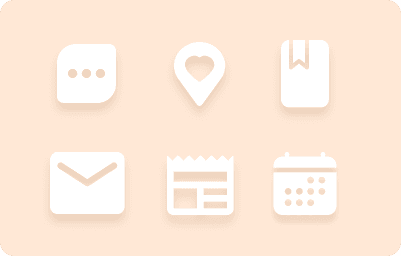
Icons used throughout (e.g., calendar, message, checkmark) were chosen for clarity and ease of recognition, even without full language fluency.


This screen consolidates the most commonly asked information: time, location, language level, vibe, and what to expect.
The layout prioritizes scannability and reduces cognitive load by grouping details logically.

The final logo mark subtly blends dialogue and community symbols — reflecting the group’s purpose of cultural and linguistic connection.
Designing for a real, grassroots community challenged me to prioritize clarity and accessibility from the start, with each iteration grounded in the lived experience of users navigating a bilingual environment.
Balancing the needs of both local Japanese users and international newcomers revealed how subtle design choices—like language tone, flow, or visual simplicity—can create a sense of comfort or confusion.
Working closely with organizers and participants reminded me that even small improvements in UX can ease social anxiety, build trust, and create space for more inclusive community participation.
While simplifying information flow helped new users, not all participants engage with community events the same way—some prefer messaging platforms, while others respond better to visual cues or direct invitations. Future iterations may need to accommodate more diverse entry points.
Crafting an interface for both Japanese and English speakers went beyond direct language translation. Layout, tone, and even button placement required sensitivity to cultural context and digital reading habits.
Users only return to platforms that feel useful. It became clear that offering information wasn’t enough—it had to be timely, relevant, and reflective of real-world needs to keep the experience meaningful.
Introduce organizer-facing tools to streamline event setup, announcements, and follow-ups—potentially reducing the communication burden on volunteers.
Explore ways to support one-time or infrequent attendees through smarter reminders, soft engagement options, or social proof to ease hesitation.
Continue refining the mobile interface with performance improvements and smarter layouts for on-the-go access in both urban and rural settings.
Consider packaging the platform as a modular, customizable toolkit that other grassroots groups can easily adapt for their own cultural/language exchange communities.